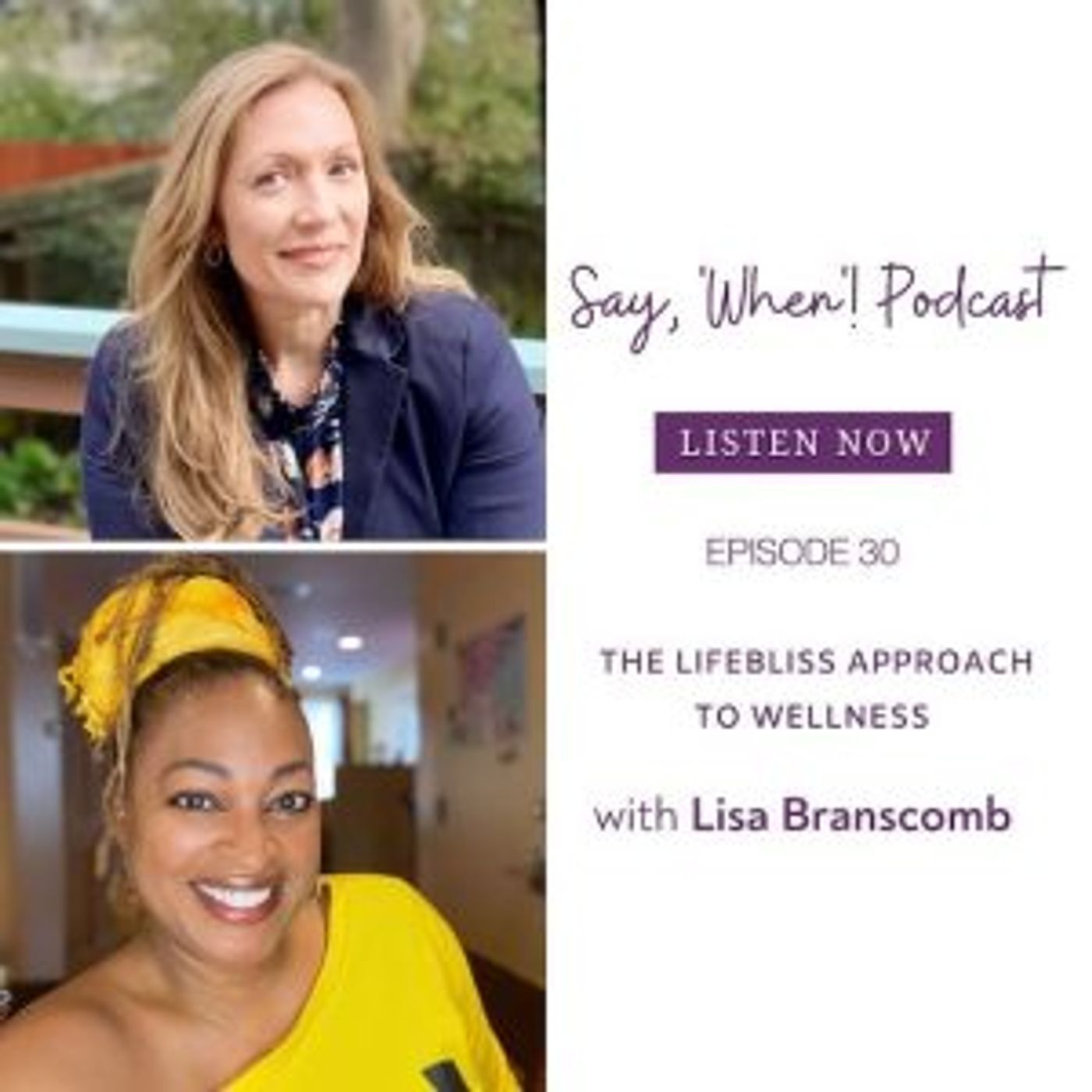
30. Lisa Branscomb and The LifeBliss Approach to Wellness
About this episode
Life Bliss Wellness is a holistic self-care approach for black women that focuses on spirituality, sensuality, joy, and relaxation. It challenges mainstream wellness narratives and addresses the unique needs of black women. By embracing femininity and pleasure without guilt, women can break free from societal expectations and experience true happiness. The approach promotes sisterhood, acceptance, and abundance, and offers practical steps for self-discovery and healing. Regardless of background or identity, everyone can access wellness and fulfillment. Starting in January 2024- LifeBliss New Year’s Soft Life Reset. Key Takeaways Lisa Branscomb is the founder of Life Bliss Wellness, a holistic approach to self-care for black women. Her approach to wellness focuses on joy, happiness, and self-trust as essential elements of health. She draws inspiration from the teachings of Tantra yoga, which emphasizes moving meditation and the connection between spirituality, sensuality, and joy. Lisa promotes body acceptance, sensuality, and joy, and aims to break free from the forces of diet culture and consumerism. She also believes that embracing femininity and sensuality is crucial for overall wellness and encourages women to trust themselves and their bodies. Website: https://lifeblisswellness.com/ email: [email protected] Instagram @lifeblisslisa
Transcribed automatically by PodView
Welcome to Say When. I'm your host, Holly Toscanini. This podcast is for any woman who's had enough of restrictive diets, feeling bad about their bodies, or putting their lives on hold until they lose the weight. If you've had enough of diet culture, then it's time to Say When. Hello, and welcome to another empowering episode of Say When, where we explore the journey of intuitive eating, body acceptance, and liberating ourselves from the shackles of diet culture. I'm your host, Holly Toscanini, and today I'm going to invite you into the transformative world of lifeless wellness, founded by Lisa Branscom, a visionary lifestyle coach devoted to uplifting wellness and fostering a nurturing anti-diet approach to self-care, particularly for Black women.
Lisa champions the philosophy that it's the perfect moment to embrace softer, healthier, and more joyful ways of living. At the heart of Life, Bliss, Wellness is a profound mindset that's dedicated and a holistic worldview where it's spirituality, sexuality, sensuality, joy, and relaxation. These things become the gateways to unlocking your inner vitality, creative spirit, and confidence. And these are essential elements for a life filled with happiness, health, and softness, drawing inspiration from the ancient enriching teachings of Tantra Yoga, which utilizes the art of moving meditation.
Life, bliss, wellness is a journey beyond personal freedom, mental clarity, and blissful experiences in the fabric of everyday life. Lisa is using this as more than a concept. It's really a celebration, an abundance, a celebration of sisterhood, acceptance, sensuality, and joy. And these are pillars of health. And it stands in contrast to the outdated practices of restriction, deprivation, and overexertion that have continually let us down. Welcome, Lisa. I am so excited to have you on today's show.
Thank you for joining me. Thank you so much for inviting me. I'm happy to be here. Now, can you share with us what really inspired you to create Life Bliss Wellness and how it specifically addresses the needs of the modern Black woman? Yes. When you look at wellness as a whole in our just mainstream culture, there's an absence of people who look like me. And the issue is not necessarily people who look like us, but people who value culturally what Black women value. And so oftentimes you see just images of people sitting on mountaintops, meditating or a stack of rocks or things like that.
and we just don't relate. And then oftentimes when we do join wellness organizations or clubs or any other type of gathering of women in the name of wellness, we just don't seem to fit in. And it does not help us because we're trying so hard to create this look that we just don't have and it's counterproductive. So I felt like we need to have wellness that actually addresses us, not trying to fit into someone else's box, but to basically build our own. Beautiful. Now, I noticed that you talk a lot about softer living.
Can you go into that a little deeper and really explain what that is and what it means for you? Yeah, I've been noticing like the last couple of years, there's been a lot of chatter online about soft life. People want to live softer. And at first, I just kind of brushed it aside, I didn't think about it until I looked a little bit closer and I found that it was, first of all, originated out of some women in Nigeria, which I found really interesting. And then I looked at the concept of it, which is a life of less stress and more joy.
And I thought, okay. And I dug a little bit deeper and I found that it matched almost identically with my previous teachings of tantra. It just was absolutely, I was like, this is tantra. And so a long time ago, I used to have a practice called lifeless solutions. And it was life coaching from a tantric perspective. And the issue that I had with, this was way back in the early 2000s. When the issue that I had was, it was hard to market because back then the word Tantra was not what I knew it to be.
There was something on HBO called Real Sex and they had an episode about Tantra that just burned me to the ground. And I was getting creeps, you know, contacting me. I was like, this is not what I want. So I just erased it from my entire program. And, but it's always been like a guiding philosophy for me. It influences my lifestyle in my own lifestyle and then even the work that I do. So as I was reading this self-life information, I was like, oh my gosh, this is Tantra. I can bring back Tantra.
And I decided to bring it back, but not necessarily saying teaching Tantra because it's very esoteric. And I also don't really prefer the guru student relationship at all. I prefer a more like a guiding, a guiding to yourself kind of set up for it. So I said, okay. And I got encouragement from my fellow coaches. They were like, yeah, do it. And I was super excited about it. But there has been a lot of interest in living a softer life. And that comes from traditionally black women being stereotypically considered like the strong Black woman and having to be the person who's providing labor or helping someone else and sacrificing our own well-being in, you know, in exchange for someone else's.
And we're getting tired. And I think one of the things that sort of triggered this was during the pandemic, when we all got a chance to just take a stop, you know, slow down and take a look at our lives. And I think a lot of Black women, as you know, everyone else did, was like, oh, you know what, this really isn't working. So we need to find something else. And so I just decided this is what I'm going to do. And I'm very excited about it. That's amazing that you were able to take those three concepts and see the overlap.
You know, I have a kind of a vision of like a Venn diagram where all of these three kind of areas overlap and that little area in the middle, that's Lisa and that's life bliss wellness. It's so cool to hear you talk about how that all came into being. You know, I noticed that both of our philosophies sort of reject the mainstream wellness narrative. How do you believe that your coaching differs from the fear and conflict driven perspectives that are currently in mainstream wellness? Well, the whole idea of lifeless wellness is joy and happiness.
And without joy and happiness, you can't have health. And that is pretty much the opposite of what's out here in the mainstream, even down to when I decided to move away from Tantra and I was just, you know, like a health coach. And people would say, okay, you have to find their pain point and tell them what's going to happen to them if they don't hire you. I was like, wait, wait, nothing's going to happen. And it was pretty disappointing because, you know, I was supposed to paint this grim picture of what was going to happen if you don't do this right now.
And it just did not resonate with me. And I failed miserably at it because I just, I'm not a good liar.
And then I just decided, okay, to hell with it. I'm not doing that anymore. And the thing is, how can you, how can wellness possibly be based in fear? That's not even, that doesn't make sense. That is kind of a powerful thing you just said, because you're right. It can't, but all the marketing that's done around it is exactly what you say. It's that hit their pain points, you know, make them afraid that if show them the scarcity, if they don't do it right now, and how can any of that be the precursor to a healthy relationship with your coach, right?
Where there's mutual trust and respect if they've been sold this idea of fear. So that's really, that's really insightful. Now, you also mentioned that you have some internal signals for self-care, what we all do, but they're often ignored because of external influences. So can you talk just a little bit about how you help your clients reconnect with and trust those internal signals? Yeah, I focus a lot on liberation. And liberation is a powerful word, especially for Black women. And so when I talk about liberation, I'm also saying stop looking for permission from external sources.
Stop looking for instructions. Stop listening to someone telling you that you need to drink 64 ounces of water every day. What if you are not thirsty? Or what if you're super thirsty, you have all the knowledge inside of you. And so I help my clients to see that. And a lot of times it's very difficult because we have taught from birth that there's a set of rules and instructions that we have to follow. And for some people, just not having that is very disorienting, not having a guide of what you're supposed to do.
But I think once people experience a little bit of freedom, like find out that nothing bad is going to happen if you don't follow someone's rules and then it just kind of takes off and then it just blossoms.
In the world we live in where diet culture and consumerism so heavily influence our health choices, how does LifeBless help women break free from those forces and make some authentic decisions for their well-being? Well, one of the things is that it doesn't, there's no, there's no thing to sell there's not a specific thing and one of the main uh principles of my idea of soft living is not the luxury you have to buy things you have to have like the most expensive purses and you know a lot of um soft life um information is about that luxury and on some level it is sort of there is a component where you're giving yourself the permission to have what you want because you can, you deserve it.
But that isn't the core of wellness. That's just a little tiny part of it. That's kind of off to the side. And so there's no, you don't have to be sold. Once you learn how to listen to your own signals and free yourself from the rules and regulations of the external sources, then you know, there's, you don't need anything else. In fact, I, my goal with my clients is such that once we work together, after that, you don't have to come back to me. Unlike the weight loss industry where they keep coming back and coming back because it's going to fail.
You know, once you learn how to apply these principles and then adapt them as your life changes, you don't need to come back to me. And, and that's, that's something that is hard for a lot of business owners to, to grasp, but it's not because there are like millions of women out here. right i don't have to keep helping the same 10 over and over again right well and what you're offering is something that is sustainable right it's an understanding of yourself and your body and what your body needs and it seems like the concepts of intuitive eating also sort of play into this idea of soft living because it does free you up from so much of the shame and guilt and restriction that we go through when we're dieting or trying to change our lives even goal setting, you know, trying to set goals in a very specific way that don't encourage you to be the kind of person who can reach the goal, not just the accomplishment of the goal being the be all end all.
And then the determination of what the goal is, that to me is very important. Who decided that you should be fill in the blank? Only you get to make that decision, not somebody else. And I find that that concept feeds right into the whole femininity idea, where historically Black women were told that we weren't feminine. And that continues today because, you know, that whole strong Black woman trope just keeps on showing its rearing its ugly head. And so that is considered not feminine. But what isn't always clear is the fact that who decided what feminine was?
As far as we're concerned, that's part of the patriarchy. And that was designed to control women. Absolutely. And so everything from the diet culture to how you're supposed to look and how you're supposed to behave, whether you're supposed to be submissive or vulnerable or all of that is all part of that patriarchal lie. And once we realize that and let go of it, then it's easier to understand that femininity isn't at all. It's not wearing pink. It's not wearing makeup. It's not being quote unquote girly.
It is none of that. What it is, it's power. It's authenticity. It's a power that comes from being a woman. And it doesn't always look the same. um for example I had a client a long time ago and she wanted to tap into her femininity and she was struggling and things like that and then at one point she shaved her head bald and you know the typical the stereotypical idea of femininity does not involve being bald-headed oh no it's like lots of of hair right yes yes once she shaved off all of her hair she became the most feminine self that she could be.
And in her instance, I think it had a lot to do with the requirements the hair thing and all the stress around it And once she got rid of that she was free And so it a very good example of how what society perceives as being feminine actually was unfeminine for this person. Wow. Yeah. You know, I don't know that women take the time to question why they think their version of femininity is really their version when exactly what you just said. It was a set of sort of guidelines and rules that was given to us by primarily white men about what women are supposed to look like.
And it's the subservient, it's the thin, it's the hair, it's all of those things that make us fragile and helpless and dependent when sometimes the most feminine thing you can do is just stand in your own power and reject that. Yeah. That's really exciting to hear. Now you had mentioned that your practice was influenced by tantric yoga. Could you explain how some of those teachings are adapted in your approach to this more contemporary lifestyle? How do you use this with your clients? Well, first of all, the whole idea of feminine power turned on its head.
Just like what we were just talking about, the fact that it doesn't look necessarily like what you think it does. And it is powerful. It is not weak. It is not submissive. It is not vulnerable. It is power. And once that's the sort of the first part of it, once you feel that, okay, I had this power, it's almost the same. The only thing I can kind of compare it to is being a mother or a homeowner. Somehow when I got this mortgage payment, I became like, okay, I'm the boss of everybody and everything.
My house, my rules. Exactly. And, you know, there was things, you know, I bought in a neighborhood where things were going on and I wasn't afraid. I'd just bust outside and be like, oh, what do you think you're doing right here in my yard? And that's the closest analogy I can come up with, with that power. It's nothing like what we thought it was. It's a feeling and it's inside. And you have to kind of move around and find out how to trigger it into action. And another part of Tantra is sensuality, which is also often misunderstood.
It's not, it's looked at as being bad or sinful. But in reality, what sensuality is, is a connection between you and the world around you. And that connection removes the duality. So you are actually a part of it. And one part, you know, my most effective way to demonstrate this is with nature. You know, if you go for a hike in the woods, or if you just stop and smell some flowers, the sensuality, the connection, you need your senses, your sense of smell, your sense of taste, your visual, your hearing, all of it, the touch.
It all is a system of information that comes to you, which makes that connection between you and the outside world. So making sensuality a more of an everyday experience and also allowing for it to be pleasurable without it having some bad connotations has been a huge part of it because that also feeds into being able to connect with your inner person as opposed to just all the rules and regulations on the outside. And then the other things that really are almost identical to my tantric teachings are self-trust.
Sometimes, I mean, always, you just know better. And sometimes the outside world doesn't agree. Oh, well, that's too bad. And self-love, which is also historically taken away. We have to sort of beat ourselves up because we're not what the expectation is. But being able to push that aside and that kind of rolls into acceptance and body neutrality. Acceptance of everything, all of your circumstances. But for women in particular, body neutrality is a huge part of that because how you are in your environment affects your feminine power.
So it's all connected together. And to me, just the eye-opening part of, oh my gosh, this is Tantra. I get to bring it all back, every bit of it. The only difference is the way I present it. I don't have like a guru and a student kind of relationship. And I don't actually teach Tantra. I just take the principles of Tantra and help people decide how they want to live and what what they want out of their lives and how it can basically help to balance their lives and allow them more joy and pleasure.
And so it's a little bit different, but I get to use all of that good information that I got. I think you touched on something really critical when you're talking about sensuality. If you are in a body that you have been told is wrong your whole life, it's almost impossible to connect with that part of yourself, that sacred feminine or that sensuality, allowing yourself to appreciate the body that you're in. How do you work with clients when they have challenges with their perception of their bodies or their body image?
The first part is that my potential clients have to have the potential to do this. I can't go out and convince people that this is the way. So when a woman reads my literature and she's attracted to it, there's already a little piece, a little tiny piece there that is open, just maybe a little bit open to the concept. But there are so many more who are not. And sometimes it's just a part of life that you're in or a level of maturity or just whatever happened to you. So that women have to be at a certain level, which is sort of like being fed up with following all these rules and it's getting nowhere similar to fed up with the dieting and you end up back in the same place every single time once you realize that this is just a groundhog day and you're making part of it you're now ready you're like okay you have that that um that energy ready right and so that's the way it it doesn't always work.
But if someone is attracted to the things that I'm saying, then chances are it might take a while. It's not something that happens overnight. A lot of times it can take six months to a year or even more of working in order to fully embrace it. But once it's embraced, then there's that liberation. Yeah. It sounds like whenever a woman is able to reclaim that part of herself, that alone makes her a force of nature. You know, that alone, that connection to the sacred feminine part of you that you accept and you embrace and you allow.
Because for so long, we're told that that part of us is dirty or wrong, or we shouldn't want to enjoy any sort of pleasure in our lives, whether it's, you know, a physical pleasure or even just the pleasure of going out, like you said, and having a walk and smelling the flowers. Would you tell the audience a little bit what your personal journey was like in rediscovering and embracing your own femininity and how it's influenced your life and your work? Yes. So I never actually lost touch with my femininity.
It wasn't a thing. I just didn't think about that. So I was just going along. And in my past, I was a professional belly dancer. And so that was, of course, very feminine, very sensual. and I was looking for another dimension to my dance. It was, I didn't, I don't know how to describe it to any, it's like, I didn't want it to be flat, just somebody making moves. I wanted my audience to feel the energy that I'm sharing. And so in researching this, that's how I stumbled upon Tantra. Now, as far as feminine, the power part of it, I was always sort of the person who I questioned everything.
I was kind of hard probably to raise my mom with like, she's not going to listen until like I needed some sort of explanation for everything. And it had to make sense from a young age. So you couldn't just tell me, oh, you have to do this because I just wouldn't accept it until you went into, okay, well, this is why. because if you don't, you could die or whatever. Right, right. Then I would take it seriously. And so that part of me, I didn't actually think about it. It just kind of came about from some other completely different discipline.
And that's when I started to notice around me that, oh, so I didn't even realize it was a thing that people weren't connected to their femininity. And that was one thing, I think back in those days, I'm in my fifties. So back in those days, I don't even think that was a concept. There was not a thing of, oh, let me connect with my community. That's something that you think about. So my journey was a little bit different from the younger generations now, but fortunately, we know what that is. Yeah.
Now you advocate for integrating a sense of sensuality in your daily life. Can you share some practical ways women can embrace their sensuality in their daily routines? Mm-hmm. It could be literally anything. You just slow down and notice, notice, you know, have a lot of mindfulness exercises and they're not complicated things. It just, it might mean, you know, when I'm walking home from work and I'm walking past all kinds of yards with flowers and they're all different colors and just noticing them because sometimes you just don't, you're in your own world.
You're thinking about what you're going to cook for dinner and you don't see anything. I could walk home and not see a thing, but just at least for a few seconds, just slow down and just really take a look and start to notice different nuances around you that you've never paid attention to before. Like, you know, I live in the city in Washington, DC, and, you know, sometimes I would see like this bright blue bird somewhere. Oh, who knew that they had these pretty birds here. That's like a jungle bird.
The noise is like in the summer. When I go outside really early in the morning, it sounds like a jungle here. I live in the heart of the city. Okay. I hear all these birds. I never noticed that before. You don't notice that with your headphones on. And when you're thinking about other things, I just walk there and I'm like, oh my God, it sounds like the Amazon is going on. And it's fascinating. Even, you know, the cooking, I love to cook and using my sense of smell to decide what to, you know, create with this and not having to have a recipe all the time, but just to kind of smell.
Hmm. I think a little more garlic would be good here. And so just trusting that, okay, my nose is telling me the truth. Yeah. I need some more garlic, just little things. It could be literally anything. And the fun of this is when I'm working with my clients to have them discover what, what you can, what do you discover when you just slow down? Cause there's, there's just unlimited sensual things going on around us. If we just pay attention. Exactly. And I love that you were talking about the cooking too, because I know when people take an opportunity to even eat a meal mindfully, where they are 100% tuned in and focused to what they're eating.
And they're paying attention to not just the taste, but maybe the texture or the sound it makes when you eat it, or even the sound of the room. Are you in your car? Are you at the table? Where are you? If you really pay attention, you get so much more out of that meal than just physical nutrition. You're really nurturing your spirit and your soul and all of your senses. So that makes complete sense that mindfulness would be a huge part of what you advocate for. Also, there have been studies that when you allow yourself to calm down and fully experience a meal, the nutritional uptake is actually greater.
I was like, what? So you actually get more nutrition from a meal that you pay attention to than when you scarf down without tasting. Isn't that fascinating? I don't know how that works, but it's from reliable sources. Yeah. Well, it makes sense. I mean, if you are not engaged in thinking about everything but your meal, right, then your body is more focused on getting what it needs. If you're got too much cortisol, or if you're too busy being stressed out, you're not going to digest that meal as well.
So that makes sense. Yeah, that's really interesting. So what are some common challenges that you've seen that women face and reconnecting with their femininity and sensuality, especially in today's society? Self-trust is probably the biggest hurdle that I experience with my clients because we are taught so, so flatly that we are not to trust ourselves. And we don't even think about all the different ways that we're taught not to trust ourselves, but in every single little way, even down to how much water to drink.
yeah and and you know and you and we teach our children sometimes um inadvertently this also um I have one daughter and when she was younger she went to Montessori school and one of the things that her teacher told me was just leave these kids alone let them wear what they want to wear to school and I was like oh but wait it cold outside she gonna freeze you know that wait a minute we're in Washington DC it doesn't get that cold but the thing the thing about it she told me is that no they're gonna be uncomfortable and they're gonna learn that that's not really a good idea and you won't have to deal with that anymore and I was like are you sure?
Are you sure? I don't want to be a bad mother. But, you know, even, you know, children eating, like sometimes my daughter, she wouldn't eat for like the whole day. And I was so horrified. She was a baby. And so I thought, oh my gosh, it's going to starve. The doctor told me that kids don't starve themselves. Okay. They won't starve themselves. They're just not hungry. And And I figured it out later that a lot of times when you're fighting off some sort of virus or something, your body is using all of its energy on that fight.
It doesn't have time to be dealing with stuff like digestion. And so I finally relaxed about it and, you know, just realizing that, OK, she she trusts herself. She's not going to breathe to death. She's not going to starve to death. She's going to be just fine. Right. That's part of what we we're already adults. So we never got that freedom. We never got that, you know, opportunity to just wear whatever we want to wear, do what we want to do and eat when we want and what we want. And so that was the most difficult thing as an adult, allowing that because we've been taught since birth to follow these rules.
Right. Right. It's interesting because with intuitive eating, we're not really learning something new. We are giving ourselves permission to go back and be the eaters we were born to be. Yeah. That's so fascinating. I had to trust my daughter. I had to trust her that she knew what she wanted or what she needed at the time. Right. And you can imagine I got a lot of frowns from people around me. I'm like, yeah, go ahead. you can have some ice cream or whatever. But she ate vegetables. She never had a problem with eating vegetables and things like that because I never made a big deal out of it.
I just let her do what she wanted to do. But I did get some looks and you have to be, you know, have to hold on and be strong. And as an adult, the same thing, you have to just be strong because people around you are going to be like, you know, if you want your liberation, that's what you deal with. Yeah. So tell me a little bit about some of the maybe transformative effects you've seen in women who have embraced their femininity and sensuality. If you have specific examples that you can think of from clients or just some general things that you've seen.
um I've seen a lot of different things for example I've seen women become artists wow and and that seems kind of like a strange thing to say but you know you've just been on this straight and narrow and then you have this liberation and and realize you can trust yourself and you know you can just become an artist a really good artist and this person did not know she was an artist at all. She just did what she was supposed to do. And she never, and so just the joy that that brought into her life was, was, it was worth everything.
It was so valuable. And, and I see it in a lot of different things that in, you know, just being able to make decisions about where you live, how you live career. Some people, you know, will just completely change their career because they're not getting what they really wanted. They were just going along with the flow. And, and in some cases, women have made complete changes, moved away, done things, you know, completely differently. And, and we're just content with themselves. And a lot of times you see health conditions resolve, because a lot of health conditions, stress is the root of them.
And once you remove that stress, then, oh, it's like some miracle happened, but it didn't work. Remove that stress and therefore we're able to heal who you are in your body and your mind. Now for women that are kind of new to this whole concept of embracing their femininity, what initial steps would you suggest to really start the process of learning how to embrace their sensuality and their sense of femininity? I think the first step is to do a cleanse, not a diet cleanse, but a sort of like media influence cleanse.
and start identifying sources that are telling you what you should be or what you should do or what you should have and just kind of like silence them even if it's temporary silence them just push them aside push them aside and in some cases you know I recommend that people just take like a half a day or a day and just be quiet. Don't read. Don't go online. Don't mess with your phone. Just speak with yourself and just allow yourself to just let your mind go and, and just give yourself that feeling of what it feels like not to be told things 24 seven.
Right. And, and then usually that just morphs into like, you know, blocking accounts of things and throwing away magazines and, and it just goes until, okay, now I have cleared out everything that's been influencing me to not be exactly what I want. And then once that is, and that process doesn't have to be a hundred percent complete before we are working, but it's just a start. And once you feel that, it makes it easier for you to focus on how you feel and what you're feeling and just what you want.
Because for the most part, we have been taught not to even speak what we want at all. Right. And so being able to clear out some of this noise, all this noise is so much. And once we just quiet it down, that is the first step to, okay, even if it's not completely eliminated, at least Let's tone it down a bit so that you can get to this. Asking someone to be alone with their thoughts without escaping to media or the phone or, you know, that sounds like a hard ask. Do you get pushback on that very often?
Yeah, but the thing about it is it doesn't have to be a long period of time. Okay. I got anxious just thinking about it. if you can't handle a half day sure half an hour you know whatever you can whatever you can and once once you try it realize it's not that hard it's just the beginning of it when you start you know okay i'm not gonna close everything i'm gonna shut everything down you're like but then you know just just relax everything is gonna be fine you can turn everything back on sure you know just give yourself a little bit of time and you know it's kind of like when you when you teach meditation A lot of people can't sit there and sit there cross-legged and eyes closed.
And actually, I'm one of those people. I don't meditate that way. I use moving meditation because sitting there with my legs crossed and my eyes closed in itself is, it's otherworldly. Yeah. Yeah. I don't like it. So it's not the best. And that's another thing we were told that you have to do it this way. And it's not true. You don't have to do it this way. You can meditate while walking down the street. You can, I do a lot of dance meditation, things like that. Now, do you integrate some of that mindful movement into your wellness practice?
Yes. Yes. And in fact, I'm right now working on creating a whole program around it. How exciting. Because belly dance kind of, that's how this all fits together. Belly dance was the thing that caused it all to happen. And it almost is like meditation because you are in a spiritual way when you're doing it. When you're one of the people who are doing more than just moving the body, because some dancers are just moving, they're mechanical. And that's what I was looking to get beyond. Once I did that, it was about harnessing energy and actually giving this energy to my audience.
and it's still amazing to watch it happen. But in the case of working with clients, they're not necessarily dancing for an audience, but just being able to identify that energy that there's more to this than just moving your body. There's a whole centering process and a grounding process that happens. And that also feeds right into the sensuality part of it. And it kind of helps it click because a lot of women don't even, these are like porn words and they don't know what this means at all. They're like, what?
But once you feel it, once you allow yourself to feel it, okay, now it doesn't, I see things start to click. And then that's when usually things accelerate. Right. It seems like body trust would be a big component of that too, because when we're doing something like, you know, learning to move our bodies in a different way, we don't want to get it wrong. You know, it's like, I got to do it right. And, and when you give yourself permission to trust, then maybe there's no real wrong way to do it. And, you know, that's really liberating.
It is, it is. And it's, it's, it feels good. It's, it's like, um, people realize that it's exercise. Oh my gosh, exercise all painful and terrible. Exactly. I'm flowing. I'm in my world and I'm flowing and it's, it's beautiful to see. And, you know, you don't have to be a professional dancer. You don't have have to be a good dancer, but it's beautiful to see that energy just kind of blossom. And for a woman to be in that energy without worrying about what's going on around her. Right. Well, it also, you know, is based sort of on the concept of embodiment.
And if we are in bodies that we are uncomfortable with, or that we are ashamed of, it's really hard to want to be in that body. But it seems to me that if someone could learn your methods, they would be more comfortable with themselves and learn to trust this body and then be more willing to actually be in the body that they have. It's true. And an added bonus is with belly dance, the typical thin skinny body isn't necessarily the, it isn't put forward as an ideal. In fact, in many cultures, the bigger dancers are the ones that get the most praise because in belly dance, you need to be able to like vibrate that little fat on the side.
Sure. You need to be able to jiggle. There's got to be some real movement here. Not saying that you can't be skinny because one of my instructors, she was very thin and she was amazing, but it's a very body inclusive dance. And so even though I'm not necessarily, you know, it's not the same as the belly dance classes that I went to, just that art form embraces things that we are told to hide. And so, you know, this jiggly fat hair that you thought was ugly, when you do that in front of these women in this class, there's a certain thing that we would do.
And it was.
And when you hear that sound, you know, like, yeah, that's right. I love it. That's like the added bonus from the whole belly dance idea. Well, it must be an amazing feeling to be in a group of women that are celebrating you in the body that you have right now. When as soon as you step outside of that studio or that home, it feels like everyone is now telling you again that there's something wrong with that. And it just seems to me that the more experience you have in that supportive community environment, the stronger you are when you leave to put up your defenses and just ignore all the noise that diet culture tells you about how you're supposed to look.
Because then you decide that you want to get up on stage. Yes. It's so alluring. Like you may not necessarily have any kind of aspirations, but once you put on these costumes with these jingling things and fringe and it's sparkly, you just can't help it. You just want to get up there and then your friends are encouraging you. And that's kind of how I ended up on a stage dancing. I danced at a Moroccan restaurant. It was the best job ever. So much fun every time. And I just made people happy. That was the good thing about working there.
My only job was to go there, make everybody smile, get them all riled up, and then I could go home. There's nothing better. Now, you emphasize abundance and sisterhood, acceptance, sensuality, and joy in promoting health. Can you elaborate a little bit on how these elements contribute to a person's overall wellness? Yes. I have a very firm philosophy that health and happiness go together. You can't have either. You can't have one or the other. You have to have them both because you can't be healthy if you're not happy.
And you're not going to be happy if you're not healthy. And healthy is a relative term. Healthy does not necessarily, it's not one type of healthy. Someone's healthy might be different from my healthy. It's determined, it's self-determined. determined So whatever you feel is okay this is the best I can be the best I can feel the best I can work with given my condition That is what health is So the two of these things go together And generally in our in our wellness society happiness is not in it at all.
There's no happiness. You're going to eat this broccoli and this brown rice and you're not going to be happy, but you'll be healthy. No. So the sisterhood part of it, it's all, it's all come to get comes together with joy and also, um, stress relief. Yeah. So the sisterhood with, with women who are encouraging and like happy for you and not putting you down and insulting you and criticizing that, that takes some of that stress away. And And when you start taking away that stress, again, that builds up your health and your immunity or whatever it is, whatever scientific part of it is.
And then the joy part of it is just, you just need that. It's something that you need. And we have been taught that that's not a necessity, that that's sort of like, oh, extra, if you're extra good or something like that, that it's not something that we should require that we have in our lives. And so that changes. And then it just opens us up to be able to do things that we never thought we could. And that all just wraps up into, so to me, health and happiness are all one big ball. Yeah, yeah. Your philosophy suggests that the path to health and wellness is accessible to everybody.
What are some practical steps you recommend for people to get started on this path? If there are women listening right now that feel like this is for them, what are some steps they can take today? Well, they can contact me if they want to. Absolutely. Actually, even before that, one of the things is to start understanding this philosophy. And on my website, I have a lot of different articles about what this is. and even reaching out to other sources, but just starting to understand what a soft life is and what sensuality is and what femininity is.
And you have to kind of look at it sort of like through a critical lens. Don't just necessarily accept everything you see because there's a huge range of, you know, around. But that is, you know, just kind of open yourself up to what these concepts are in the beginning. And that is how you kind of can start you on the path and I guess prepare you for that little bit of the open door that we talked about earlier. That little bit of acceptance that there might be a better way than what I'm doing right now, because this is how it usually starts.
It's just a little tiny little thought that pops into your head and it might go away. And then again, it comes back again. But just that curiosity, just be curious, open your mind, take a look at things, try not to let some of the prohibitions from your past influence at least what you're looking at and what you're reading about and what you want to know. And for some women, that's even hard because everything is controlled. Everything is so tightly controlled. And so just being curious. and there is no right or wrong.
So, you know, one person's femininity and sensuality is not the same as someone else's. And just being okay with that, but, and just look at the range of things that are, you know, available to us. And then if you feel like, okay, let's, this might be something I want to look into, then they could contact someone like me, or even, you know, if you don't, if you're not ready for that yet, just try something that, makes you feel good, whether it is a go, go to a painting class, go to, go to a dance class, just try something, open the door just a little bit.
And usually what happens is that you open it wider and the next thing you know, you're all in. Exactly. So what empowering message would you like to share with women who may feel disconnected from their femininity or their sensuality? um we all have we all have femininity and sensuality and the capacity to for this inside of us it's not no matter what anybody tells you like you know usually there's somebody in your family telling you oh you're such a tomboy you're not feminine none of that is true because their idea of femininity is not what we're talking about here we're talking about power something that's very powerful.
So just knowing that it doesn't matter. It doesn't matter. Even like, for example, women's sexuality, some women think that because of their sexual identity, they don't fit. That's not true at all. I don't care what you are. I don't care what you identify as. It doesn't matter. It is here. It's in everyone, including men. There is feminine energy in men. Absolutely. We have masculine energy too. And we're not, we're not trying to get rid of the masculine energy. We're just trying to unsuppress the feminine energy that we have.
We all have it no matter what. So that's one thing. And then another thing is to look at, look at it from a different perspective, which is for black women in particular who have, you know, the whole issues that women have everywhere, but then also the race part of it. It's two things at one time. There's the race and then there's the gender and it's all just one big thing. And so a lot of times that has produced generational trauma or just individual trauma. And this liberation and this reawakening of our feminine selves, our sensual selves is a healing.
It truly is a healing of that trauma and that generational trauma. And by generational trauma, I mean that trauma that was handed down from your grandmother to your mother, to you. And we want to break that before you hand it to your children, or even if you have, then you can still work to undo it. But it is imperative. It's not just a little thing that we do for fun. It is fun, but it's not just that. This is actually healing. And this is one of the many ways that we can change our narrative of being Black women in wherever we are in the world.
Beautiful. Now, if our listeners are interested in working with you, what is the best way to find you? The best and easiest way to find me is my site. And it's just lifelesswellness.com. There's a contact page where you can just type a message right in there. And if you're not ready for that yet, there's a way that you can sign up for a newsletter. If you just want to get more information kind of like without being seen. I know that happens sometimes. You're like a little bit shy. you're not really sure what you want.
Even if you don't, I am very open and I don't mind questions. And, you know, even if you just contact me and say, I don't know what the hell, I need something. And I don't know what it is. We can get to the bottom of it, but just reach out, take that first step and reach out. I'm also on Instagram, lifeless Lisa. So you can just send me a message there. And I like to emphasize that I really am. I'm not judgmental like this because entire process is devoid of judgment. So it doesn't matter what your situation is or how bad you think things are.
There is no such thing. Just reach out because this is the way that you can begin your healing without, you know, there shouldn't be anything holding anyone back. It's something that should be available to everyone. And even if you're not a black woman and you just, this resonates, I'm not exclusive. It's just that my message is mostly geared towards what culturally what we have. But, you know, those things, those lines are crossed oftentimes. So whoever, it doesn't matter. Just reach out. Now, I know currently you have a new program, the Life Bliss New Year Soft Life Reset.
Can you tell listeners a little bit about that and how they can be a part of that? Yes, that is something that I'm offering throughout December and January. It's a little five-day program, which basically starts you out with that cleanse, that cleaning out of all these influences. And it kind of, it gets you, it prepares you for if you want to do this or if you don't, whatever. It just gives you a little bit of insight into how to begin. and it's simple it's not designed to be you know so in depth or anything like that it's light and and and it helps just to reconnect with yourself in a in a light way not not like a lot of hard work it's just you know so this is and it's the perfect time of year to do it because december is a lot of hecticness i mean for a lot of people and then january you know a lot of times people want to do that whole new year's resolution thing i don't do any of it i'm so happy that sounds liberating already just not having to do it i just decided i'm not doing any of that christmas stuff and i'm not doing the new year stuff either except for you know like fun things sure sure and it's just a way to just look at things differently i mean i so much of what we do is so obligatory like these christmas parties the ones that you there's ones that you liked Okay.
I do do, I do both parties. And then there's those ones that you're like, Oh my God, I have to go. And you're like, no, I'm just a person who's like, I'm not going. And you know, people around you just adapt. Okay. You just, you put your foot down and you say, look, I'm not doing that anymore. They just, they adjust it in the beginning. They might be like, well, whatever, not doing it, not doing New Year's resolution. So there's just something that you want to do for yourself, not other people. So a lot of times in December, you're just doing things for everybody else.
You're running around, you're buying gifts, you're preparing meals and things like that. Do something for yourself for a change. Right, right. Now, if we are doing the lifeless New Year's soft life reset, this is not about setting a New Year's resolution, right? No, no, no resolution. it's just five days of action items that you can do. There's no real goal. It's just action items. And then at the end of that, you can decide what it is you want. You know, if you want to move forward, you want to do something more, or if you're just like, that was fun and move on.
It's fine either way. Fantastic. Well, as we kind of wrap up this enlightening episode of Say When with Lisa Branscombe. It's clear that her journey and the founding of Life Bliss Wellness are not just about transforming health, but also about nurturing a deeper connection with our inner selves. And Lisa's dedication to promoting a lifestyle that centers on spiritual sensuality, joy, and relaxation as pathways to health and wellness, especially for Black women, is both inspiring and revolutionary.
And her approach, deeply rooted in the teachings of Tantra yoga and moving meditation, really offers a fresh perspective on achieving personal freedom and bliss in everyday life. Lisa, thank you for sharing your wisdom and insights with us today and reminding us that embracing abundance, sisterhood, acceptance, and joy is a critical part of our pursuit of a healthier and a more fulfilled life. Thank you so much for having me. This has been great. I'm going to recap a few of the things I'm taking away from our conversation before we end this session, because I think this is such a great bit of information that everybody needs.
Lisa's focus on reconnecting with the sacred feminine and sensuality offers a transformative path to wellness that emphasizes the importance of understanding and embracing these aspects of our lives. And her holistic approach incorporating the spiritual, the mental, the emotional well-being alongside the physical health really challenges the conventional wellness paradigms and encourages a more inclusive and empowering perspective on health. And today's conversation really highlighted how joy and relaxation aren't just leisure activities, but essential components of a healthy lifestyle, crucial for accessing inner energy and, as she explained, even creativity.
And Lisa's rejection of the restrictive deprivation-based norms of mainstream wellness culture really underline the need for more nurturing and accepting approaches to our health and our fitness. And a key message from Lisa is that wellness and a fulfilling life are accessible to everyone. And I want to encourage listeners to give yourselves permission to pursue your true desire and live authentically. I think that was a great conversation, Lisa. Thank you so much. I am so excited to have you here and can't wait to hear more about the things that you're going to be doing in the next year.
And would love to have you back again another time if you're willing. Absolutely. Thank you so much. I totally enjoyed this. And anytime you want me back, I'll be back. Fantastic. Thank you for joining us for another episode of the Say Win Podcast. Until next time. Bye for now. Bye.
thank you for tuning in to this episode of say when the podcast for women who've had enough of diet culture and are ready to get on with their lives if you'd like to learn more about working with me send me a dm through instagram at holly toscanini or you can find me on my website holly toscanini.com thanks for joining me
 Apple Podcasts
 Spotify
 Castbox
 Castro
 Goodpods
 Moon FM
 Overcast
 Pocket Casts
 Podbean
 Podcast Addict
 Podcast Republic