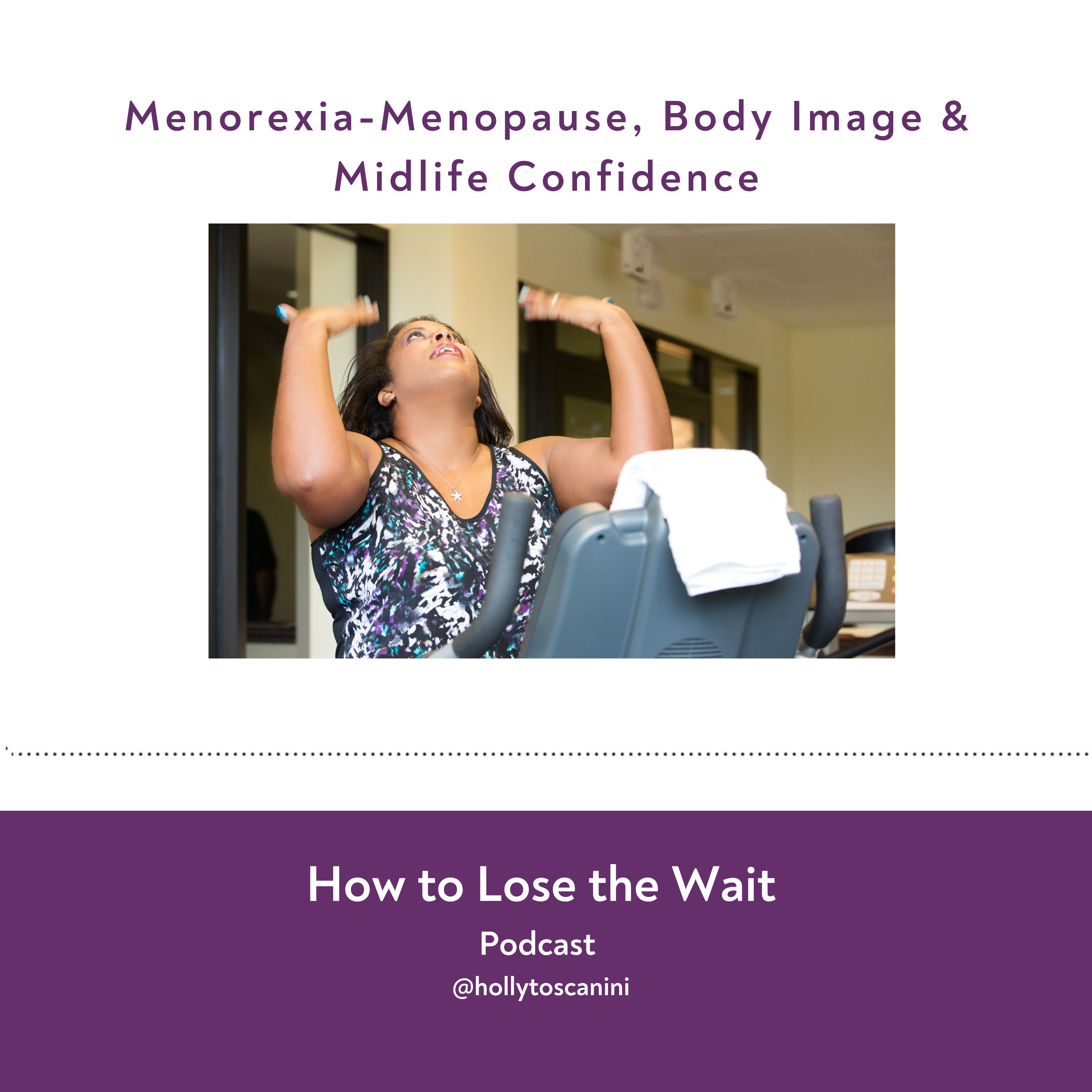
135. Menorexia-Menopause, Body Image & Midlife Confidence
About this episode
What is menorexia? You've got a changing body, a culture that expects you to hide the change, & the old promise that life gets better once you get your younger body back.
I draw on decades of dieting history and my years working in intuitive eating and body acceptance to explore why health-promoting habits & restrictive thinking can look so alike from the outside, & why the better question is what's driving a habit & what it's costing you.
If you'd like help finding your one honest next step, try The Honest Answer Coach, my free self-coaching tool. You tell it what you've been feeling, and it asks a few thoughtful questions to help you get to what's underneath and leave with a next step that fits your actual life.
https://holly-toscanini-f50a.mykajabi.com/the-honest-answer-coach
If You Need Support
If food, exercise, or your body are taking up more space in your life than you'd like, you deserve support from someone who specializes in this. The National Alliance for Eating Disorders offers a free helpline staffed by licensed therapists at 866-662-1235 (Monday through Friday, 9 a.m. to 7 p.m. Eastern), and a treatment directory at findEDhelp.com. The helpline isn't a crisis line. If you're in crisis, call or text 988, the Suicide and Crisis Lifeline.
Related Episodes
Episode 134: Hormone therapy and sexual health with Dr. Jennifer Roelands
Episode 133: You're Not Becoming Invisible. You're Becoming Harder to Ignore.
Research Mentioned
National Alliance for Eating Disorders, "Eating Disorders in Midlife and Beyond" (about 13 percent of women 50 and older report at least one current eating disorder symptom)
2023 analysis in Menopause estimating midlife eating disorder prevalence at roughly 3.5 percent, with individual symptoms more common (summarized by LifeStance Health)
#menopause #perimenopause #menorexia #bodyimage #womenover50 #bodyacceptance #intuitiveeating #midlifewomen #howtolosethewait
Licensed Podcast music https://uppbeat.io/t/mood-maze/trendsetter License code: VGZ66UBEGXBP8YK8
Holly Toscanini: Somewhere between 45 or 50, it happens to all of us. You catch a glimpse of yourself in a store window and don't quite recognize the woman looking back at you. The waist is thicker, the jeans that were fine last year just aren't fine anymore. Your sleep is different, your energy is different, and the body you spent decades managing has started making decisions without consulting you. And almost immediately a little voice shows up with a very familiar plan. Hello and welcome back to How to Lose the Weight. I'm Holly Toscanini, and this is the show for women who are done postponing their lives until they feel ready, certain, or have everybody's approval but their own. Last week I talked with Dr. Jennifer Rollins about hormone therapy and sexual health. If you missed that episode, go back and listen because it pairs very well with what we're going to talk about today, which is our changing bodies. And this time we're looking at what happens in our heads as we go through the change. Now, you may have seen the word menorexia lately. It's been showing up in headlines and it's all over social media. And I want to talk a little bit about it. I also want to talk about something bigger that sits just underneath it. And now a quick note before we get started. Today we're going to be talking a little bit about eating disorders and disordered eating. And I'm going to keep it at a level of patterns and lived experience and I will not be getting into numbers or specifics about food or weight. So if this is a sensitive topic for you right now, take good care of yourself and you'll find some support resources in the show notes. Menorexia is a blend of menopause and anorexia. It isn't a formal diagnosis. People have started using it as shorthand for the disordered eating that shows up for the first time or comes back during perimenopause and menopause. And it covers more than just restriction. The word also gets used for binging, for compensating, for rigid food rules. For the whole range of ways a woman's relationship with food can kind of get tangled up when her body starts changing. Now, most of us still picture eating disorders as a teenage problem. And that picture leaves out a lot of women. One study found that about 13% of women over 50 reported at least one current symptom of an eating disorder. And a 2023 analysis in the journal Menopause put the rate of diagnosable eating disorders in midlife. At around three and a half percent with individual symptoms far more common. Researchers have started describing the menopause transition as a window of vulnerability, and they compare it to puberty. And honestly, that makes a lot of sense to me. In both seasons of our life, our hormones shift and our bodies change shape without asking for permission, and a woman's sense of who she is can kind of get shaken loose. For some women, this is a first time struggle. For others, it's something from decades ago coming back, something she thought she'd put down a long time ago. And a lot of it goes unnoticed because from the outside it can look like a woman who's finally taking her health seriously. And that's where I want to spend most of our time today. The question I kept coming back to while I was preparing this episode was this one. What happens when menopause changes your body and culture keeps telling you that your job is to make sure nobody notices? Because that's the message we get. Look, your body is going to change and you're still expected to fight it quietly, gracefully, with the right supplements, proteins, peptides, workouts, and ideally without anybody seeing you sweat. And there is an entire business market built around this. "Meno-Belly" programs, hormone balancing cleanses, before and after photos of women who got their body back. The language is a little gentler than the diet ads we grew up with as kids, but the promise underneath it hasn't really changed at all. And that promise goes something like this: Life is gonna get better once you get your body back. Now, most of us have been hearing some version of that since we were 12 years old. Life gets better when you lose weight, when you fit into the dress, when you finally look the way you're supposed to look. Then menopause shows up and hands that old promise a new target. Now, the body you're supposed to be chasing is your own, but from 10 or 20 years ago. And I want to tell you why this one matters so much to me. I spent most of my life dieting, I'm sure like a lot of you did. I knew the rules, the restarts, the Monday mornings, and the New Year's resolutions. I did it all. I know what it feels like to believe that the real version of your life starts once you've somehow fixed your body. Now later I worked in intuitive eating and body acceptance and I began helping women untangle themselves from diet culture. I came to body acceptance by taking the long way, by living on both sides of it. And watching women go through menopause now, I see something that I think gets missed. One of the trickiest things about midlife diet culture is that genuinely health promoting habits and old restrictive thinking can look almost identical from the outside. Take strength training. It's good for us, especially as we age. Muscle matters, bone density matters, and I'm for all of it. Picture two women, both who lift weights a few mornings a week. Now the first one does it because she wants to stay strong enough to carry her own groceries and keep up on a hike when she's eighty. And if she misses a session, she's not. She just shrugs it off and goes on the next day. The second woman cannot let it go if she misses a session. She feels a wave of panic about what her body might do without her constant supervision. She tacks on an extra workout or cuts back on what she's eating to make up for it, and she still feels like she's barely holding the line. Now, from across the gym, you never know which woman was which. Or here's another one. Think about protein. Plenty of women feel better when they eat more of it at this stage in life. And that can be a very useful discovery. For some women, though, eating more protein slowly turns into a list of foods that are no longer allowed. The list gets longer. Eating out gets more stressful. Birthday cake becomes a negotiation, and every meal starts to feel like a test she might fail. Now her lunch might look like anybody's healthy lunch. She's just scared almost all of the time when she's eating it. So when you look at your own habits, the most useful question to ask is what is driving those habits? The second question is what are they costing you? Now, does this come from wanting to feel well again? Is it making room in your life or is it slowly taking up more and more space in it? If food and exercise are taking up more space in your head than they used to, if an interrupted routine sets off real panic, If you started avoiding meals with other people, or if the rules keep getting tighter and never loosen, please take that seriously. Eating disorders at this stage of life carry real medical risks, and they're also very treatable. You deserve support from someone who specializes in this. The National Alliance for Eating Disorders has a free helpline staffed by licensed therapists, and I'm gonna put that information in the show notes. Reaching out is one of the most self-trusting things you can do if you need help. And if none of that sounds like you, stay with me because I think this next part might. See, a lot of women listening may not recognize themselves in what I just talked about. But I'd guess many of you are doing something quieter. You're waiting. So let me ask you the question that sits underneath this this entire episode. How much of your life are you postponing? While you try to get your pre-menopause body back. All right, maybe you won't buy clothes that fit because this isn't your real size. So you rotate through the same three things that sort of work, and the rest of the closet becomes an homage to the woman you used to be. Maybe you're avoiding taking pictures. Maybe you get behind your sister at the family reunion or you offer to take the picture so you don't have to be in it. Now, twenty years from now, there's not gonna be much evidence that you were there at all. Maybe you're waiting to date or waiting to let your partner see you with the lights on when you're naked until you feel more like yourself. Maybe you've stopped feeling visible because you don't recognize the woman in the mirror and it just feels easier to sort of fade into the background than to introduce everyone to this woman. None of that would show up on an eating disorder screening, but it still costs something. This is conditional living in a changing body. I'll get my Get back to my life once my body gets back to normal. And waiting like this can feel responsible. It can feel like discipline or just being realistic. But underneath it, there's usually a very old belief that you have to earn your place in your own life. Menopause makes that belief especially cruel because the body you're waiting for isn't coming back in the form you remember. Your body is doing what bodies do at this stage of life. It's changing. And some of that you can influence, but a lot of it You can't. If your life is on hold until your body cooperates, it might stay on hold for a very long time. And I say that with a lot of compassion because I understand why we do this. We were taught over and over that a woman's body is the first thing she's going to be judged by, and that aging is a problem we have to manage. Of course we flinch when it starts happening to us, and it's still costing you. The dinner you skipped, the trip you didn't book. the years of photographs that you're not in. So what do you do with all of this? Well, you don't have to love your changing body this week, and you don't have to feel at peace with every shift that happens. That'd be a lot to ask. And anyone who promises it to you is probably trying to sell you something. I'd like you to pick one thing you've been putting off or postponing until your body is back. Just one. Then find a small way to do it in the body you have right now. If it's clothes, buy the one thing that fits you today. One pair of pants you don't have to think about when you sit down. That's enough. If it's pictures, let somebody take one of you this week and don't delete it. If it's something bigger, like dating or a trip or putting yourself forward for something at work, pick the smallest version of it that you can still respect. Send the message. Look at the flights. Say yes to the invitation you'd normally talk yourself out of. These are micro pivots. They won't change everything overnight. What they give you is evidence that your life can keep going while your body changes. And evidence is how self-trust is built. And then afterward, notice what your inner critic says, and then notice what actually happened. Those two stories are often pretty far apart. So If you went through your list and you couldn't land on your one thing that you've been putting off, that's worth paying attention to as well. Because for a lot of women, the body is the place where the waiting is the easiest to see. You know exactly which pair of black pants you've been saving and what pictures you've been deleting. But underneath that, there's often something quieter. It might feel like a low hum of restlessness you just quite can't quite name or a feeling you've been living a little bit on hold. You couldn't tell anybody when it started or what you're waiting for. And that's a harder place to pick a micro pivot from because you're still trying to figure out what you actually want. So if you keep thinking, there's nothing really wrong, so why don't I feel like myself? And you'd like help finding your one step, I built something for that. Because let's face it, your life works. But if you still feel uncertain, like something's missing, there's usually a reason. And this can help you figure it out. It's called the Honest Answer, and it's a free self-coaching tool. You tell it what you've been feeling and what you've been thinking about for months, and it asks you a few thoughtful questions to help you get to what's really underneath it all. You leave with one honest next step that fits your actual life. Takes a few minutes and it's free, and you'll find the link in the show notes. Look, your body's gonna keep changing. That was always gonna be true. And menopause just made it harder to ignore. And if we can't stop that from happening, okay. But how long you put your life on hold is completely up to you. Buy the clothes, get in the picture, go on the date. Your life is happening in the body you have right now, and you're allowed to be in it. Until next time, bye for now.
 Apple Podcasts
 Spotify
 Castbox
 Castro
 Goodpods
 Moon FM
 Overcast
 Pocket Casts
 Podbean
 Podcast Addict
 Podcast Republic