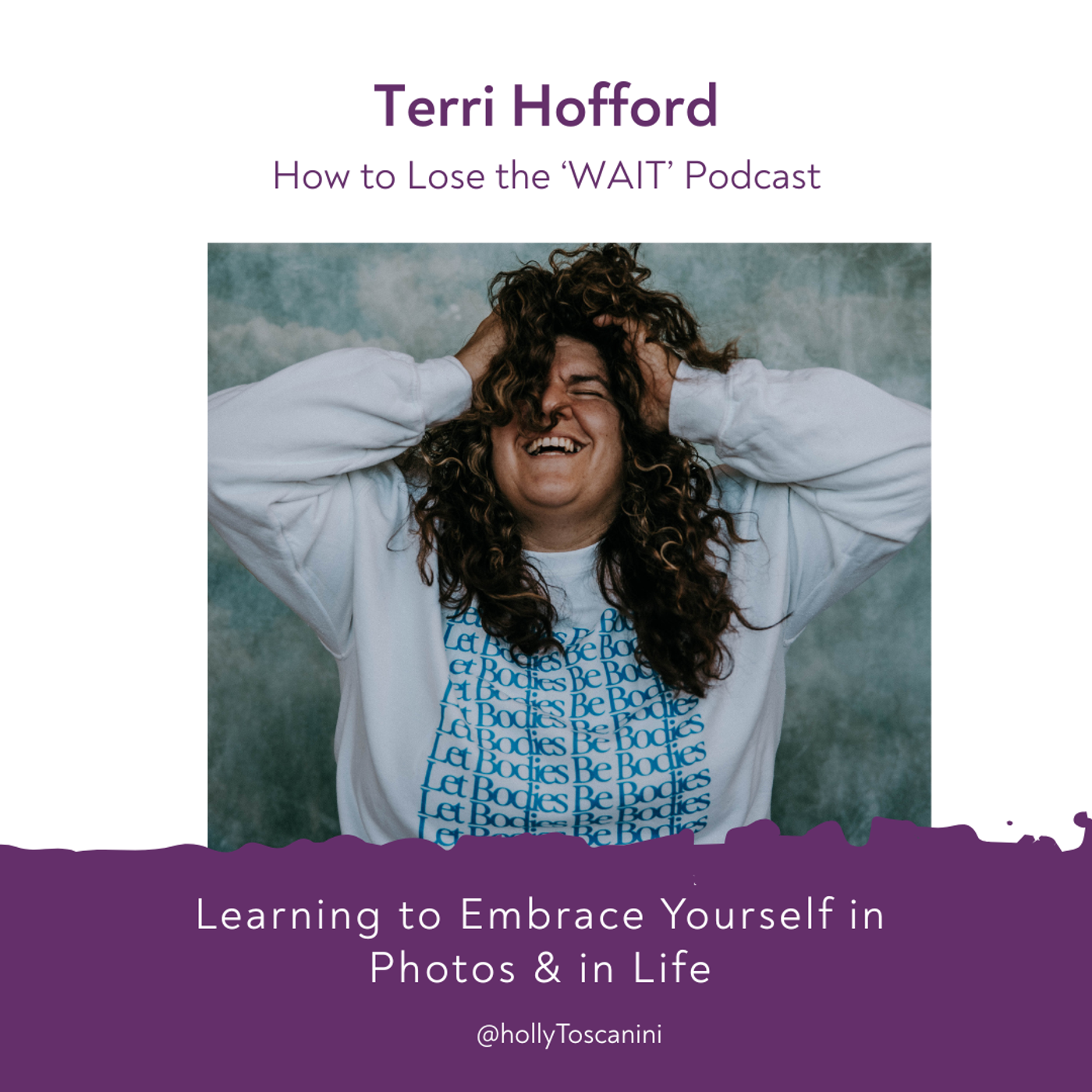
77. Teri Hofford- Learning to Embrace Yourself in Photos and in Life
About this episode
If you’ve ever waited to feel camera-ready—or life-ready—this conversation is your wake-up call. Teri shares tools, mindset shifts, and empowering stories that will help you stop hiding, start showing up, and see yourself through a lens of compassion and truth.
Transcribed automatically by PodView
Today's episode is a fierce, funny, and deeply freeing conversation you didn't know you needed. If you've ever looked at a photo of yourself and cringed, if you've ever thought, I'll book the shoot when I lose 10 pounds, or if you've paused your life because you didn't like what you saw in the mirror, this one's for you. I am joined by the incredible Terri Hofford, a body image educator, photographer, author, podcast host, and self-proclaimed disruptor of the status quo. She spent the last decade helping women stop shrinking in photos and in life, teaching them to see themselves through a radically compassionate lens.
We're talking about unlearning beauty standards, healing body shame, and reclaiming visibility on your own terms. This episode isn't about how you look, it's about how you see yourself.
Welcome to How to Lose the Weight, the podcast for women ready to stop waiting for someday and live life now. I'm your host, Holly Toscanini, and I'm here to help you break free from perfectionism, self-doubt, and the someday mindset. Together, we'll dive into real conversations about self-trust, empowerment, and living authentically. If you're ready to reconnect with your intuition and step into your power, you're in the right place. Let's lose the weight and start living fully right now. Today I'm speaking with Terry Hofford, a body image educator, speaker, coach, and author who helps reformed good girls heal their body image and self-worth so they can lead rebelliously soft and powerful lives.
She uses her ACE method to help clients through group and one-on-one coaching, find their voice and reclaim their authentic selves really to go after the life they truly deserve. She's the author behind the bestselling book, The Geode Theory, Chipping Away at Body Image, and she has two other books, 2200 Characters or Less, and Homecoming, Tales of Travel, Discovery, and Self-Acceptance. Now, her amazing TED Talk, Five Reasons You Look Bad in Photos, and her subsequent course, From Cringe to Compassion, Six Weeks to Embrace Yourself in Life in Photos, has encouraged countless individuals to really start showing up in their lives unapologetically.
And at the heart of everything Terry does, her goal is to help individuals ditch the shoulds for the could so they can live more freely. Welcome to today's podcast, Terry. So good to have you here. Yeah, thank you so much for having me. I'm excited to be here. I wanted to start by talking about the geode theory, if that's okay with you. Yeah. I love on the page for this book, the question is, what do rocks have to do with body image. Do you mind answering that question? Yeah, absolutely. Whenever I talk to people about the book, I always have to preface like, does everyone first of all know what a geode is to kind of like set the stage?
And for those of you listening, if you don't know what a geode is, it's essentially a crystallized formation that has formed under pressure. And my thought process has always like, I'm a geology nerd. I loved collecting rocks as a kid and all of these things. But I remember I was sitting at like the Calgary airport or one day and I was just like, body image is just like a geode. Like it just loves like hit me in the brain. And I was like, okay, wait, what does that mean? And I was like, well, there's like all these different layers, but we're, we all have that sparkly stuff that we were born with.
And it gets like even more sparkly because of the hard stuff that we end up going through. But usually there's a whole bunch of layers of like gray, dull belief systems that other people have taught us about ourselves. So if we could chip, chip, chip away at that gray, dull stuff will eventually reveal the sparkliness within is kind of the idea behind it. And like my own life has been a testament to that. So yeah, you talk about that a lot in the book, you know, you talk about your sort of journey with body acceptance, and trying to control your body, and ultimately how you just decided that maybe you didn't need to control anything.
And I think that was really amazing. And for anybody who doesn't know the book, you've got to go get it. Because at the end of each chapter, Terry has these amazing journal prompts that are simple, but they're really powerful to get you to look inside and really explore those limiting beliefs that you might have about yourself and your body and how you're supposed to show up in the world. I would also say it's good for like, regardless of where you are on your body image journey, because like, as somebody that's been doing this work intentionally for the last like 10 to 15 years, I still have moments where I'm like, Oh, my body.
But I would go back to the questions that I and the practices that I encourage people to do in that book. So for people that are like, well, I don't really need to like, it's still good to have those tools in your tool kit for when they do show up, even though it might be less frequently than it used to be. Right, right. Now, tell us a little bit about how your path as a photographer led you to body image education. Yeah, so basically my whole life, like, and I write about this in the homecoming book, like my trajectory, when I look back at my whole life, I was always interested in like, pushing back against the culture that tried to change me.
Like even from being a little kid, But I also grew up in a small town and I was a good girl. That's why I talk about that a lot in that I needed to follow the path, you know. And when I say the path, we all know what I'm talking about. Like you go to university after high school, you get a real job. And that didn't last long for me. And so what happened was I was like, I'm going to be a teacher. I'm going to go to school, get my teaching certification and like teach traditional. And then I went to Korea, taught English for two years and was like, no, I don't want to teach children like that is not not my forte.
And I thought that was kind of like the end of my teaching career. But turns out I do like to teach what the stuff I like to talk about. So being a photographer, which I found my way to photography after living in Korea. and I just was like I'm gonna just try and see if I can do this as a job and thankfully I found myself in like boudoir photography and helping people embrace their bodies because back in 2014 I would say if people were photographing plus-size bodies like mine they weren't showing them and I really wanted to kind of carve out a space where people with bodies outside of the societal standard could feel like they could come and be photographed.
And as a result of that, my business did really successful, which was great. But for myself, what was really cool was that I got to witness thousands of people over the course of my career in all different shapes and sizes come in and every single one of them, for the most part, said, I hate the way I look in photos or I don't like this thing about my body like everyone regardless of their size shape age gender ability it didn't matter everyone had something about their body that they didn't like and that got me thinking like if everybody hates something about their body then it can't be about the body because at no point was somebody like this is it this is what they told us we should this is the body we should have now i am cured and everything is wonderful no everyone had insecurities And so because of that, again, it was like a little lightning strike to my brain, like, let's get curious about this and take a look and see, like, why does everybody have something about themselves that they don't like about their external appearance?
which led me into learning about the psychology and the science behind body image and why why the things we think about ourselves aren't actually about our body it's what we've been made to think about our body that is getting in our way so yeah long story kind of short story though good story and it kind of leads me into the question i have around your TEDx talk In that talk, you said that something about why we don't like the way we look in photos, because it's a reflection of ourselves. Can you talk a little bit more about what that means?
Yeah. So what I referenced there, so that's point number one in the five reasons that I talked about in that talk. And so it is a little bit different than how you mentioned it there. So the first thing is like why we have a hard time seeing ourselves in photos is because we're used to seeing ourselves in reflection. And so because most of us aren't symmetrical in our facial attributes, particularly when we look at a reverse of it, we're always taken aback a little bit by like what we're seeing in a photograph because our brain is a learning machine.
Right. So if our whole life, for the most part, the only time we ever truly see our face is in a mirror, in a store window, in a like reflection pond of a pool, like you're only seeing one way of seeing your face and it's the reflection. But that's not the way everybody sees you. Right. And so when we see a photograph of ourself, it is the reverse of a reflection. and so our brain says whoa whoa whoa this is not the version of you that i know this is something else and we feel we get a little shot of cortisol stress whatever um and in that moment we make it mean something more than it does which is what i talk about in the tedx talk we're like oh my god because because this doesn't match up to what my brain is used to something must be wrong i look bad in photos instead of just like sitting with the photo a little bit longer and letting your brain get used to the idea that this is also what you look like.
You look like this and you look like the reflection. Both are true. Neither is good and neither is bad. They're just simply different versions of how you look. Yeah. That's, that's interesting. It reminds me of a test or something like a, an experiment we did in art class where we took a photo of ourselves and cut it in half and then did a mirror image so that you would see what perfect symmetry would look like. And it's terrifying. You don't look anything like you. Yeah, I know. It's fascinating to do that.
So if anybody hasn't done that yet, get your phone. Yeah, there is a filter on TikTok. I think that it'll just like reverse your face. Of course there is. It'll flip your face. um and yeah it definitely is terror i think it's terrifying because i'm like that is not what i look like at all um but it it really comes down to that feeling of squidginess that's why i call that discomfort that we feel we just like so quickly interpret it to mean that oh i look bad in the photo instead of stopping for a minute to say oh that's uncomfortable i wonder what that's about and looking at the full context of what could be causing that.
Right. And I really, I loved how you kind of put into perspective the idea of hyper-focusing on our insecurities. You have that one photo of you and all of your girlfriends out in the desert. And you were talking about hyper focusing on just one area of your body and how that sort of spun for you, even someone who is a body image educator. And you said this a little earlier about how we still have insecurities. yeah and a big part of that has to do with um like stress when you're viewing when you're viewing photos of yourself or just look at yourself in the mirror if you're stressed out your brain is not in any state to have a like self-defense against the negative talk because it's on the lookout for risk and those of us especially socialized as women we've been taught that our looks if they don't adhere to beauty standards are risky to our survival like it's unfortunate but true so when we're in a state of stress like I think I mentioned in the TEDx talk I'd come home from Vegas I was tired from traveling you know I had to jump back into business I was exhausted and I decided to look at the photos then so my brain went right to whatever I wanted to see which was how how did I look compared to my friends um oh how big does my stomach look that was for me what I focused that was the part of myself that I hyper focus on and this is something I see with all my clients and I let them know before they see their photos that this is going to happen like we have conditioned ourselves to hyper focus on certain parts of our face or body when we look at any photos and it doesn't matter how long you've been doing this work for you still
will do that because you've, you know, spent 25 plus years training yourself to do that. So it's just one of those things. If we know that it's going to happen, then we can go into it understanding like when this happens, here's what I'm going to do about it, right? Come up with like a little contingency plan. And then in that same vein, understanding that what we want to see is what we will. So if you're about to look at a photo of yourself, or you just look at yourself in a mirror, and you're like, Oh, I bet my stomach's gonna look disgusting, it will.
Because you've just told your brain what it's going to see. And our brains love to confirm our stories, because it helps us make sense of the world that we are creating. So I always encourage people instead of thinking, Oh, my arms are going to look big, or whatever your normal thing is, is to say, I'm going to be open to how Terry sees me, or I'm going to be open to how I look in this photo. Because then you're using that same part of your brain that normally would be used to hijack your body image and use it for good to help you stay open during looking at those photos of yourself.
And what a gift to be able to give your clients is to have that conversation with them. before you look at the photos, let's have a chat because I think it gives them an opportunity to breathe a little bit before they see the photos and be a lot more open to the beauty that going to be coming through without putting all of those filters of criticism And you know you talk a lot about shifting from self to self For you, what does that actually look like in practice? Yeah, I think like we're just taught from such a young age, again, it doesn't even matter what your body looks like.
We are taught from such a young age to be so critical of ourselves, like it becomes our default. And I even see this in my nieces and nephews who are in their young teens right now. It's like a self-defense mechanism. I think in psychology, they call it the spotlight effect. If I point this out in myself, then it hurts less when somebody else does it to me, which is where my self-deprecating humor came from, all that good stuff. It hurts less if I bring attention to it first. But our brains don't know the difference between a joke and the truth.
Everything we tell ourselves, it's like, okay, that's the truth then, I guess. So every time we're criticizing ourselves, whether as a joke or not, our brain's like, okay, that's the truth. And you can like, again, imagine like chipping away. It's like any self esteem you had the moment you were born, every time you say something that's like self criticism, It's like chipping away that self-esteem. And like, I had to come around to this idea for myself and understand like, as somebody that's in a larger body, the world will not hesitate to chip away my self-esteem.
Like, that is something I learned from a young age that the external world will be trying to do that. But I don't have to be complicit in that. And instead, I can build myself up every day to make sure that even if somebody comes along and tries to chip away that self-esteem, it's so strong that anything anybody says, I'm like, that's not true. I've got evidence to prove otherwise. But I have to create that evidence. Nobody else can do that for me. and so that's kind of the switch that has to happen because self-criticism is such a default we don't even know we're doing it most of the time one of the best things i encourage people to do is set a timer for two minutes and write down all the negative shit you think about yourself and you will be shocked probably by just how horrible it gets um and this is a good exercise to do like even if you've been doing this work for a long time those thoughts are still there just waiting to come up oh absolutely and and once we this is kind of what i talk about the ace method once we're aware of the things we think about ourselves then we can do something about it but if we don't if we're not even aware that it's happening how can we change it right i just hear people say like oh i wish i could be more confident i wish i could be body positive like you i wish well it's not wishing it's work like you literally have to be okay to be like face the squidginess of this is what I've been telling myself.
And then instead of getting judgmental that you've been the one like chipping away at your self-esteem saying like, okay, I'm not, I refuse to do that anymore. Like I understand why I did it. You know, it was easier. It was safer. It was self-defense. It was whatever, but we don't have to do that anymore. I'm like 40 years old. I don't want to do that anymore. You know, like life is too short. Like I want to, I want to connect to myself. I want to listen to what my body's telling me. I want to trust it.
I want it to lead the way forward for me because I always tell everyone like your body knows how to be a human better than your brain does. It's been around longer than your frontal cortex, you know what I mean? Right. Literally. Yeah. Bodies, bodies know more than brains actually. Terry, you mentioned the ACE method. Would you tell our listeners who aren't familiar with that what what it means and how you use that? Yeah, it's like such a simple well, it's I make it sound simple. But like, it's basically like ACE just stands for awareness, curiosity, and then empowered action.
And it's like a three step formula, model, whatever you want to call it system to kind of just like, figure out if you're not getting an outcome that you want. So this is like an, I'll just use a current example of myself, because I was writing a newsletter about this yesterday. one of the things I keep telling myself is like I want to save money and yet I still find myself going to the thrift store like two or three times a week to buy stuff that I don't need but I like the thrifting right so if if there's something that you want maybe you want to have a better body image maybe you want to feel better about yourself or better self-awareness maybe you want to show up more, whatever it is.
But you're not getting it. Something's going, something's getting in the way of you doing that thing. So we need to become aware of what is the thing that's getting in the way. And the best way we do that first is by becoming aware of what, what is happening right before I'm going to go thrifting. We'll just use that as an example, or right before I do the thing that is counterintuitive to the thing that I want. So what happens right before I'm negative to myself? What does it feel like in my body right before or just hearing the thought that comes up?
And using the example of me when I was like writing about, okay, what, what do I notice right before I'm about to go thrifting? Number one, I'm bored, usually. And I'm like, okay, there's a lot of other things that you could be working on your business to make money. so what is that about and I realized the thought that I have like when I think about saving money or just like not going thrifting immediately my chest is like tight because I'm like oh I I want to do whatever I want to do and it's like okay so I'm not even afraid of saving money I'm actually afraid of losing the freedom to do these things that I maybe once couldn't do All right.
So that awareness then allows me to get curious to be like, okay, like, yes, it is, you know, where did this come from? Like, why are you afraid that you won't ever be able to go thrifting again? Or why are you afraid that you're not able to live this life? What is this protecting you from? So that's where the curiosity comes in is just like exploring that thought, feeling or behavior that you're having. And then from there, we get to like based on those answers, you'll get to what I call empowered action, which is in the moment right before you're about to do the thing you would normally do, which is to go thrift shopping or to call yourself a negative name or to cry in the fitting room or whatever it is.
you can stop and say I choose something different you know what I I understand that I'm like sometimes that empowered action is just like tapping your chest to say I know little Terry you're afraid of not having the freedom to be able to go do what you want but guess what we're trying to like we've got some big goals that we're working towards and once you get there it's going to feel so good to be able to go do these other things. Right. So it allows you to just kind of put, I call it like a stop gap between the default thought, feeling or behavior, this like three step process.
So yeah, it's, it's, again, it sounds simple, like awareness, curiosity, but I was teaching a class once and I was, and I just assumed everybody was self-aware because I've been journaling since I was like, you know, five, right. Right. Basically. So I've been talking to myself forever. So I was teaching this class about like body image reset. And, um, I was like, yeah, you just got to like catch your thoughts. And then I moved on and talked about whatever else for the whole day. And at the end I was like, does anybody have any questions?
And somebody puts up their hand and they're like, um, yes. How do we hear our thoughts? I was like, wait, not everyone's just having a constant dialogue in their head like I am so I had to realize that how do how did I learn how to hear myself how to hear the inner voice and then uh as I was like for myself one of the ways that body image gets in our way is it disconnects us from feeling because we don't trust our bodies so our bodies are sending us signs all the time about things that we don't like things that we people we shouldn't be with or we live in a society that tells us those feelings are something else right and we don't trust our bodies and so for me I just like stopped feeling anything for a really long time and that would be what I had to learn to become aware about was my feelings later on in my 30s and that was a good practice for me similar because I could hear the thoughts I was having, but I couldn't see how those thoughts were attributed to a feeling I was having.
Does that make sense? Absolutely. Absolutely. It makes sense. It's really powerful when you can recognize the emotion in your body. Because you don't always intellectually understand what's going on. You're just reacting. And you're reacting to something you may not even know is going on. So that's really, that's really interesting. Yeah. So bringing that awareness to feeling for some, like, I find like people that are natural movers like dancers yoga people that do yoga people that like are really in tune with their bodies they tend to be more aware of what their body is saying or doing but they're not necessarily aware of the thoughts that are attached to the feeling and they'll still experience a similar outcome of like shame outrage like that triggering that happens but they'll be able to trace it back to the feeling but not the thought whereas thinkers can trace it to a thought but not necessarily a feeling but the thing is your thoughts create your feelings and your feelings create your thoughts so we have to like understand it all and it is a process and that's why i say like it sounds simple in theory the ace method but it is work um to number one get yourself to a safe enough place in your life that you're okay to to bring all that negativity up, to bring up defense mechanisms, to bring up trauma, to look at it and get curious about it instead of letting it run our lives.
The biggest thing I always tell people in terms of like a lot of it's our inner child, like when we react to things or that, like I said, when I go shopping, it's not 42 year old Terry that has goals of saving money. It's like, you know, seven year old Terry that didn't get to buy whatever she wanted and now has adult money and wants to go buy whatever she wants um but so thinking about it that way can also help it's like okay if i know that it's like some little version of me is trying to be heard right now they may not be doing it in the most like a child they may not be doing it in the most like kind way or that may be coming across detrimental but it's because they're trying to get your attention.
So I would say if you don't connect to your inner child, your inner child will connect to you in ways that you may not want. Yeah, it may take you thrift shopping. Yeah, exactly. When you when you know that you have bigger goals that you want to just like seeing what's out there. Yeah. Now earlier, you talked about growing up being a good girl. And I've heard you talk about being a reformed good girl. How does that impact your body image and how did that kind of all come to be? What does it mean to be a reformed good girl?
And how does that show up at our bodies? Yeah, so this is something that I just recently realized, like a lot of the work that I do has been around. And of course, like I always say, because I go first, and then I report back. But I realized that a lot of the things that I would do in my youth was to make up for the fact that I had a societally bad body, but I wanted to be a good girl. I learned quite early on, like I'm the middle child in my family. There was, you know, our family household had a bit of stress.
My brother and sister are more alike than different, and they are tend to be more outwardly emotive. So I learned like, oh, I because they're doing that. I can't do that. Like I'm the good one. Like even my birth story, like my mom always say, Terry's always been the easy one, just four pushes. And she was out. Like my fate was sealed to be a good girl with that narrative of like, I need to be easy because my mom's proud of that. Like I need to be an easy child. So there's nothing better than a child that never tells you when they're upset, hurt, frustrated, angry.
They're always taking the high road. They are always achieving good things. They're always like checking, checking the boxes. And again, nobody said that to me explicitly, like I was the good one. But it was definitely implied and not just with my mom, but my dad, but also my teachers. They would like tell my sister like, oh, you need to be more like Terry. And then they would tell me you need to be less like Corey when I would speak out or when I would be a bit more mouthy. or whatever. And I'd be like, Oh, shut that down.
And so because of that, I wanted to be good. But my body was always bigger as a child, that I learned that, okay, if I can't be a value with how I look, then I need to be a value of how I serve people. And so my whole life, I would try to make up for the body that I had and this turned into over giving um always compromising uh settling for people that wanted to give me scraps instead of what I actually deserved uh and just like constantly like that and of course that with so that attached to a society that's telling you you know if your body doesn't look like this there's something wrong with you and this is why because your body looks like this this is why you're not successful this is why you don't get the like the perfect love this is why you aren happy this is why right so we have those two things coming together So I believed the whole time up until like you know I started doing this work that my body was the reason that I was stuck in all of these different ways.
Once I did this body image work, because I was like, no, I want to heal my relationship to my body. My dad died of pancreatic cancer. And like, when he was young, and I was like, I don't want what am I doing? Like, life is short. I got to get rid of this like distraction. But once I realized like my body is just a body trying to do its job, right? And it doesn't care about beauty standards. I was like, what have I been blaming my body for? And I realized that I've been blaming my body for everything that was me just trying to maintain my good girl status.
wow right and so once I started to work through my body image and get back in touch and trust her suddenly I started to recognize oh this career I've created for myself even though it's ticking all the boxes it doesn't feel good why doesn't it feel good this they told me it should feel good and it doesn't feel good for me like what is that about and I recognize like again that's why I talk about the shoulds. Well, it should feel good, but it doesn't. Right. But this is what I was told this. This is the thing.
And so once I was able to recognize that my body wasn't the problem, then I was able to look at the ways in which me being good has been the thing that has been preventing me from moving forward. Either it's waiting for somebody to give me permission to go after the life that I want or to say out loud, I don't want to work. I just want to create all the time. Like, oh, I felt sick the first time I said that out loud. To say that I want to make money, like I felt so bad because like, again, women have been taught that you're selfish or greedy if you want excess abundance.
Like to undo that, like untangle all of that is this whole thing. And it was working when I ended up hiring a coach, Camille Walker, who's an amazing coach, because she knows that I ask the right questions. And she had said to me, she's like, well, what do you want on our first coaching? And I was like, I don't know. And she was like, you do know you're just afraid of it. And I was and so I had to look at why was I afraid of it? And again, that's where the ACE method comes in. Oh, yeah, there is fear there.
What am I afraid of? I'm afraid of disappointing my parents. even though one of them's gone. You know what I mean? And my mom really doesn't care. She wants me to be happy. That's what she wants. Right. But that little Terry is still like, oh, but you have to do this. You'll disappoint the people that have given you opportunities. You're going to disappoint them if you don't say yes. Right. It's just so entangled, all of it. So it sounds like being able to break that pattern isn't just physically liberating, It's emotionally and maybe even spiritually liberating as well.
Oh, absolutely. It's I always tell people like self-growth work or whatever your self-development work. It's kind of like going to the dentist and like when they're like doing the scaling. It's like the deeper they go, the more painful it is. And you're like, there's just more under here. Like what's happening? But it's because of all that unresolved stuff that like I was just like trying to run from because I was afraid of disappointing or being a burden or, you know, speaking out too much. Like I used to be called a troublemaker for asking questions in a job.
So then I'd be like, okay, we don't ask questions now. That's my whole job is like just asking questions all the time. Exactly. Especially as a coach. Yeah, exactly. But it's taking me so long. And then the other thing, like, like I still get squidgy when people criticize or give me feedback on things. Like that's still like inner defensiveness comes up because I'm like, no, I'm, I'm good. Like, okay, calm down. They're not saying that, but I've also had to rewire like, what does good actually look like for me?
Uh, and instead of being good girl, Terry, we're just tear. What does Terry look like? Yeah. Kind of like, but it took me writing it out when I say good, what does that look like? What does good mean? It's subjective, right? Right. Yeah. So it sounds like healing the relationship you had with your body changed the way you lived your life? A thousand percent, because mostly because I was just able to realize that the all the all the crap is just such a distraction. Yeah, it literally like we've just been maybe it was like that generation, like I grew up in the 80s, 90s, early 2000.
So it was it's just such a distraction from going after what we want. Like your whole thing is like, why are we waiting? Right. And that's just it. Like even in photography, so many people be like, I'd love to have photos of me, but I have to wait until I lose weight or whatever. I don't look like this or whatever. And I'm like, you know, the camera doesn't care. Right. Like, like, and I don't care. Like I want to photograph you now because you'll be just as worthy now as you are. If you should lose weight, it's the same body.
It just looks right and so yeah so I think like it's just it makes me mad it pisses me off that we waste so much time like we could be changing the world and we're constantly fretting about changing our bodies come on it's absolutely true and how many times have we regretted not having documents of photographic documents of events in our lives right like I don't want to be in the picture. I want to be in the back. I hide behind somebody. And then you're like, gosh, I wish I had pictures of that person or that event, or that was the last time we were all together.
So you really do miss out on everything when you, when you wait, or when you think that it matters as much as it does. And also, cause I actually was just writing, I wrote a post about this that I'm going to be posting, I think next week or something, but about how I used to be that way, where because I was in a bigger body even from a young age like tall and broad I would hide in the back and I thought I was or I wouldn't be in the photo at all and I thought I was doing a kindness because I again as a good girl I didn't want me to be the thing that ruined a beautiful photo or I didn't want to be the the person that you know got in the way or whatever and in doing so I ruined the photo because like then I'd be at the back like sulking you know like the stupid like smile that's just like not an authentic smile um so I try to make yourself smaller right I mean you try to shrink behind everything to accommodate other people oh so crazy yeah and so so it's like we end up creating these self-fulfilling prophecies for ourselves where it's like I was afraid of being like ruining the photo and because of that I did like either I wasn't in it and then my friends were like yeah it sucked that you didn't want to be in a photo with us like and that's where I tell usually like good girls tend to be maybe more empathetic or we pretend to be more empathetic
we think we're being nice all the time right but I want to encourage the people that that resonates with where we're trying to be nice all the time that you're in doing so you're actually not you're actually saving yourself it's not about the other people and you are like I don't know about you but I've never looked at a photo that I've been with my friends and been like that one ruined this whole photo no I'm like I'm so glad I have this photo with these amazing humans in my life you know what I mean like I was never upset that somebody blinked in a photo I was never I was just happy that we had a documentation that we did something together.
And, and if we can like turn that around on ourselves and think about, they just want me to be in the photo with them. They just want me to be with them in this experience right now. How can I let go of this insecurity and just be with like for them, if not for yourself, for them? Right? You say it's, it's not about feeling pretty. It's about feeling powerful. And it sounds like that's exactly what you're talking about. Yeah, yeah, it literally is just like, you don't have to like, and this is a one that one of the biggest myths, I guess, about like body positivity, or the body image movement, whatever you want to call it.
It's like, you have to love your body all the time, or you have to be okay. Like you have to think it's beautiful all the time. No, I don't think my body's beautiful all the time. I just know that when it's not adhering to beauty standards, it also doesn't detract from my worth and value as a human, which gives me power. Exactly. Yeah, I say you're very, you're very unshakable when, when you can have confidence in that, where it doesn't detract from who you are. Now, if you had any like basic tips that you could share with somebody that's maybe getting ready to take the plunge and get some photos taken or to just show up more fully in their lives through photography what are some some things you might say to them to help prepare if they're feeling a little squidgy yeah first i would say look at so like be intentional about the photographer you're choosing first of all um find somebody that does photograph bodies like yours that is so important and photographers if you're not photographing all bodies come find me and i will give you education to help you understand why um but uh that's number one is like do that research and i know everyone's like but price listen it's worth it i have seen people people have come to me after they've had a negative experience that we've now had to undo you know what i mean so they paid 75 for a photo shoot with somebody that didn't care about their body image or whatever and it caused them to have a lot more insecurities about themselves so when they came to me and had to spend three thousand plus dollars yeah that's like we've had to do that much more work and they had to invest that much more money like i've seen what a bad quote-unquote bad photo can do to somebody so do your research but
also if you find somebody whose work aligns with you like please save up for it it is worth it to have somebody that takes care of your body image and how and the things you think about yourself, like somebody that will sit with you in that and help you work through it. There's a lot of people that have trained under me that have taken my education, listen to me speak that are on board with this. So there's a lot more people doing that now, which is awesome. So that's number one. Yeah. Number two is if you're like, okay, I'm doing the thing and I'm scared, whether it's a family photo, wedding, self portrait, whatever you're doing, you're doing it.
That's awesome. this is where it's very important to become aware of all the things you're thinking beforehand because it's like a roller coaster at first you're like yes I did it I booked I'm so awesome and then like two days later you're like what the fuck did I just do what did I just sign up for you know and be sit with all of it right like sit our brains have the ability to hold all of it I'm excited and I'm anxious that this is going to happen. And now my favorite thing to ask people, and I talk about this in the from cringe to compassion course, is what are you most afraid of seeing?
Oh, good question. Yeah, because that's the thing that holds people back. So I'm like, okay, so what are you afraid of seeing in a photograph? And most people will say, well, I'm afraid of looking bigger, because that's just where society is, right? Afraid of looking older, that's the other one uh and so my question back to you after you've answered that question is what would it mean if you did because you might right because at the end of the day as photographers we don't know how you see yourself like yeah we can have conversations but i truly don't see what you see in your head right so there is a possibility in the creation of art and i show you photos that I think are beautiful of you, you will see yourself the way you want to, which is if you're afraid of seeing yourself bigger, you will, because you've just told your brain, that's what you're going to see.
Right? So you will. So why don't we just have that discussion ahead of time? What would it mean if you looked bigger in a photo? And then go down that journaling process, because understanding that and then asking yourself, okay, is this true? Because you'll find out that you're mostly just afraid of dying alone and being alone and nobody will love you or find you attractive not how fat your arms are yeah exactly like it starts at oh I'm afraid of seeing how big my arms are okay what would it mean if your arms were big well it would mean that I've let myself go okay well what would it mean if you let yourself go well it means that my partner will go find somebody smaller okay and what would it mean if your partner went and found somebody smaller well it'd mean i'd be alone and what would it mean if you were alone i would die because our brains are so freaking dramatic like they are that i always tell people like more often than not every fear that's up here at the surface is the fear of being alone because our core desire as humans is to belong and like literally our evolutionary desire is to belong so the fear that we might not it's terrifying but once you go through that you can't control if your partner leaves you for somebody smaller that's not that's not up to you yeah you could have the smallest arms in the world they still might leave you right um so you can't control that but when you get down to that and say like what is the possibility of this actually happening right then you can have that conversation
with yourself and if you're like well the possibility is like 95 leave him before he leaves you then okay like if it's that high you already know that something's probably not right right exactly your body already talking to you get that power back that the thing so so ask be honest with yourself about what you actually afraid of seeing and what would it mean if you did see that before you even see it because then when you do see that photo and yeah your arm might look bigger you'll be like yeah my arm's just bigger it's not a big deal yeah you know it's just fabulous it's just a big arm yeah because it's like everything's neutral right we just assign so much meaning more meaning to things and if we can understand what we're making a big arm mean and i like every week now i'm doing posts where it says like god bless my and last week i think it was last week i did one god bless my big arms this week was god bless my soft tum like uh but it literally is like you can make it mean whatever you want like my big arms have done so much stuff like they can lift much they they can punch people in the face like you know that's why i say like that's what gets me to move my body and work out it's like just in case i have to punch a nazi is right you never know my motivation you know
terry you're hilarious all right what is one thing you wish every woman over 40 knew about her body that is just a body it literally is a scientific organism designed to get you from point a to point be and it doesn't care about beauty standards it literally has your back the whole time even when it's quote-unquote ugly or uncomfortable like your body is talking to you all the time and again i would put the question back what are you making your body mean like the way that it looks what does it mean because my belief is that like i did some research on like neuroscience and things like that and basically learn like our brains are meaning making machines like when we look at stuff we assign a meaning to it good bad or otherwise right and we do the same to ourselves this is why when you look at something that has a body just like yours you're like oh my god you're so beautiful because you assume the inherent goodness of that person most of us right we're like oh my god they're magical so i'm gonna tell them this but then we look at ourselves with the exact similar body shape type age whatever and we're like but not you though and i believe that's because our bodies represent all the things we think about ourselves all the shame pain trauma grief
unprocessed feelings this body starts to represent that which is why it doesn't matter how much weight you lose doesn't matter how strong you get yeah you'll get more compliments from other people but you won't believe it yourself right is because your body represents the things you dislike about yourself the most which has nothing to do with your body and a great example of this is if you've ever dated somebody and at first you were like oh my god you're so handsome beautiful whatever oh my god you're delightful and then they did something you know where they hurt you physically mentally emotionally whatever suddenly they're the ugliest motherfucker you've ever met they physically haven't changed like physically nothing has changed on them but their meaning of how they look changed because of their actions or whatever and so it's the same thing that we do to ourselves so this is where again holding the two things can be true work through your grief trauma pain like all the all the negative shit you got to work through that but you also have to be building up the things that what are you good at make a list of 100 things that you're good at this is my mom makes everyone do this she comes in in contact with it's really
hard right make a list of 100 things you're good at uh be grateful for the things that you contribute to your family your friends like you you have to fill up your cup no you can't let other people do that like this is the thing that we get wrong we're like again we've been taught that we need to rely on external validation. So it's not your fault until now. Now that I'm telling you, now you know. That's your responsibility. Now I'm telling you, you are responsible. So going forward, nobody to blame but yourself on this one.
You get to wake up every day and decide what are you putting into that cup? Are you filling it up with good stuff? Or are you filling it up with self deprecating humor, with mean thoughts about yourself with negativity? And then or are you leaving it empty and just taking whatever the world gives you and believing that which I've seen happen online for example somebody might if they don't have a solid foundation in themselves suddenly they're getting a lot of positive feedback you know they're like oh this is amazing yes I feel so confident quote unquote but then somebody comes along because people hate to see people being confident and they'll say you're a piece of shit or like negative negative and suddenly you're like oh god i am that thing because you've been relying on everyone to tell you what you are you're going to believe the good and the bad right and boy it only takes one bad comment to knock out a thousand good ones right literally it's like what is it one negative one negative experience it takes like five positives to neutralize it wow or like one second of positive negative reinforcement to 12 seconds of positive reinforcement so what i get people to do with that list of negative things i'm like okay for every one you have to write like 12 positive things about yourself to just neutralize it that's not even to like uh give yourself abundance of it this is just like making it like flat so you you have to be the one to do that so that way when your cup is so full of like all
this beautiful stuff you think about yourself and somebody comes along and tries to throw something and that's negative it's just gonna bounce right the heck out because there's no room for that here right like up right you you cannot you cannot penetrate this cup of goodness a couple of times we have mentioned the term squidgy and squidgyness that's also the squidge is the name of your podcast tell us just a little bit about that is that a new endeavor is this something you've been doing for a while well squidgy is just kind of a word that i came up with in conversation with somebody once when I was talking about the discomfort we feel when our beliefs are being challenged.
So I always say you feel squidgy like I usually feel it in my chest. I think most people it's like you feel it in your chest, whether it's like you're listening to a podcast, let's say like this one. And I said something and you're like, oh, I don't agree with that. That's squidgy. Like or if you judge somebody, there's squidgyness there. Why are you judging them? They have nothing to do with you. Right. When you feel jealous, that's squidginess. When you feel anything, it's just like when you're starting to do that work, it's like this uncomfortable middle ground where you can continue to do what you've always done, or you could try doing something else and look at what is this squidginess teaching me?
So yeah, so it really is just a word that kind of what they call that on onomatopoeia, where it's kind of like sounds like what it is. Yeah. So that's just kind of where that comes from. I love it. Now, tell us just a little bit about the six week course that you've got. Yeah, so it came off the back of the five week, five reasons you look bad in photos, because I was only given 13 minutes. Actually, I was given 12. And I went to 13, I think, or 14. As it was, but like, there was so much more I wanted to say about all those topics.
In fact, that talk was six reasons you look like shit in photos, but I had to bring it down to five. for a TEDx talk. But if they join the program, they get the bonus point. Yeah, you get all the things for real. And so what I've seen happen through it. So we've taught it twice now. And it's so cool. By the first class, literally, people start to understand like, oh, my body is over here. And everything I think about it is over here. And this is what we need to work on. And so, yeah, so basically it's like six weeks.
We go through each of the five points that I talk about in the TEDx talk, just a lot deeper, a lot more like of the psychology behind it, go into the science part of it and then follow up each week with the ACE method. And what questions are we asking? Plus, there's homework, of course, every week for you, because I am a big believer in exposure therapy. obviously that is the ultimate squidge um so it's looking at yourself in photos and being honest with what you see um so that is essentially the course and at the end of six weeks the hope is again this what i basically say at the end of it is like you're you're never not going to see a bad photo of yourself like that's not possible as a photographer i know this there's going to be a photo that does not live up to what your brain has told you it should somebody tags you in a photo that you're kind of like just half in you know like because they look good they don't really care what anybody else looks right you're gonna see one where you're confronted we'll say the point i want people to get to at the end of that six weeks is that when you do see yourself in those photos that it doesn't detract from your self-value or self-worth and that makes taking the other photos the ones that are perfectly posed perfectly lit so much more fun because there's less pressure for you to look a certain way in order to be photographed like it takes like basically going through the whole course takes away that barrier to entry that we've been taught that we have to wait until we look a certain way before we can be photographed that says now i'm going to go into
this we're going to have so much fun i understand that some of the photos might make me uncomfortable but some of them are going to be awesome. And yeah, and it gives you so much more freedom to show up, not just in photos, but also in life, because everything we talk about in there is just about showing up and facing what are you most afraid of? And everything we're afraid of is never actually the things we think. It's the things we've been taught to think by other people. And And that's what holds us back from doing a podcast or standing on a stage or just making a post on the Internet.
We're so afraid of what other people are going to think about us. And my course brings all that to the surface. And then I'm there to work with you through it. So it's basically like group coaching, which I freaking love. And and it's so good. Plus, you can ask me any questions you have about your own specific body image. And I keep the class sizes small for that purpose because I want to be able to help people with the specifics that they in particular are experiencing because everyone's similar but slightly different.
Amazing. Where can we go sign up for this course? Yeah. So on my website is terryhoffer.com and there's a space that says courses and it'll say six weeks to embrace yourself in photos and life. I think it's in there. How often are you teaching it? Sorry? How often are you going to be teaching? Oh, so I'm teaching the next one, August 27th. So you can still get in for that. I don't know when this is publishing, but hopefully before then. Yes, definitely. Yeah. So my hope is that I teach it four times a year, just because I keep the class sizes small, but it is such the feedback from it from the students has been awesome.
Like they love the small class sizes. They love the accountability that I'm there. Like teaching, it's not just a self-paced course. it's like no you come to class I will be there the other thing I do which is different than a lot of courses as well because I do connect with people on my social media across the world is that I host the class at two different times so there's one will be in the evening of my time zone which is mountain and then one in the morning so that way I can get as many people in different time zones or just schedules they can take whichever one suits them better so yeah that's fantastic to know, because I know not all of us that are coaches are able to do that.
So that's thoughtful of you. I think that's fantastic. Yeah, I will say that came out of the last one. Yeah. Well, I think this has been fantastic. And as we wrap up, I want to leave our audience with a question. What would change if you stopped criticizing and started connecting? What's landing with me most from our conversation today is really this reminder that healing our relationship with our bodies isn't just about how we look, it's about how we live. And I've also learned that when we stop trying to shrink or fix or filter ourselves to fit somebody else's idea of what we're supposed to look like, or how we're supposed to act or who we're supposed to be, we give ourselves permission to finally take up some space and be who we are here to become.
And that that shift from self criticism to self connection that you mentioned earlier, It's not just personal, it's revolutionary. Thank you, Terry. I want everybody to know if you have been waiting for the right body, the right time, or the right lighting and angles to finally show up fully in your life. I want you to let this be your permission slip to stop waiting and start living. Because as Terry reminded us today, you're not here to be perfect in photos. You're here to be present in life. Thank you so much, Terry.
I am going to have links to every which way we can connect with you, whether it's TikTok or Instagram or on your website. And this episode will definitely be airing in plenty of time for everybody to rush out and sign up for Terry's course. Thank you so much, Terry. Until next time. Bye for now. Thank you for tuning in to How to Lose the Weight. If you enjoyed today's episode, be sure to subscribe so you never miss a conversation. And if you found value in this episode, I'd love it if you could leave a review.
It really helps the show reach more women like you who are ready to step into their power. For more insights and inspiration, follow me on Instagram at Holly Toscanini or visit hollytoscanini.com. Until next time, remember, stop waiting and start living.
Thank you.
 Apple Podcasts
 Spotify
 Castbox
 Castro
 Goodpods
 Moon FM
 Overcast
 Pocket Casts
 Podbean
 Podcast Addict
 Podcast Republic